- Mon - Fri : 8.00 AM - 7.00 PM
- 2421 S, Drake Ave, Chicago, IL 60623 USA
- Welcome To Chicago Roof Repair Pros
Rooftop Snow Removal Services
Snow on a roof looks harmless until you understand what it weighs. One inch of wet, dense snow can reach 20 pounds per square foot across the full roof surface. After two or three storms without removal, that load tests the limits of rafters, buckles flat roof membranes, blocks drainage, and in serious cases causes partial structural collapse. We provide professional rooftop snow removal for both residential and commercial properties. We clear the load safely, treat ice dams, restore drainage, and inspect the roof afterward so winter damage gets caught before spring reveals something far more expensive.
Request A Free Quote
Completed Projects
0
+
5 Star Reviews
0
+
Happy Customers
0
+
Rooftop Snow Removal for Residential Properties
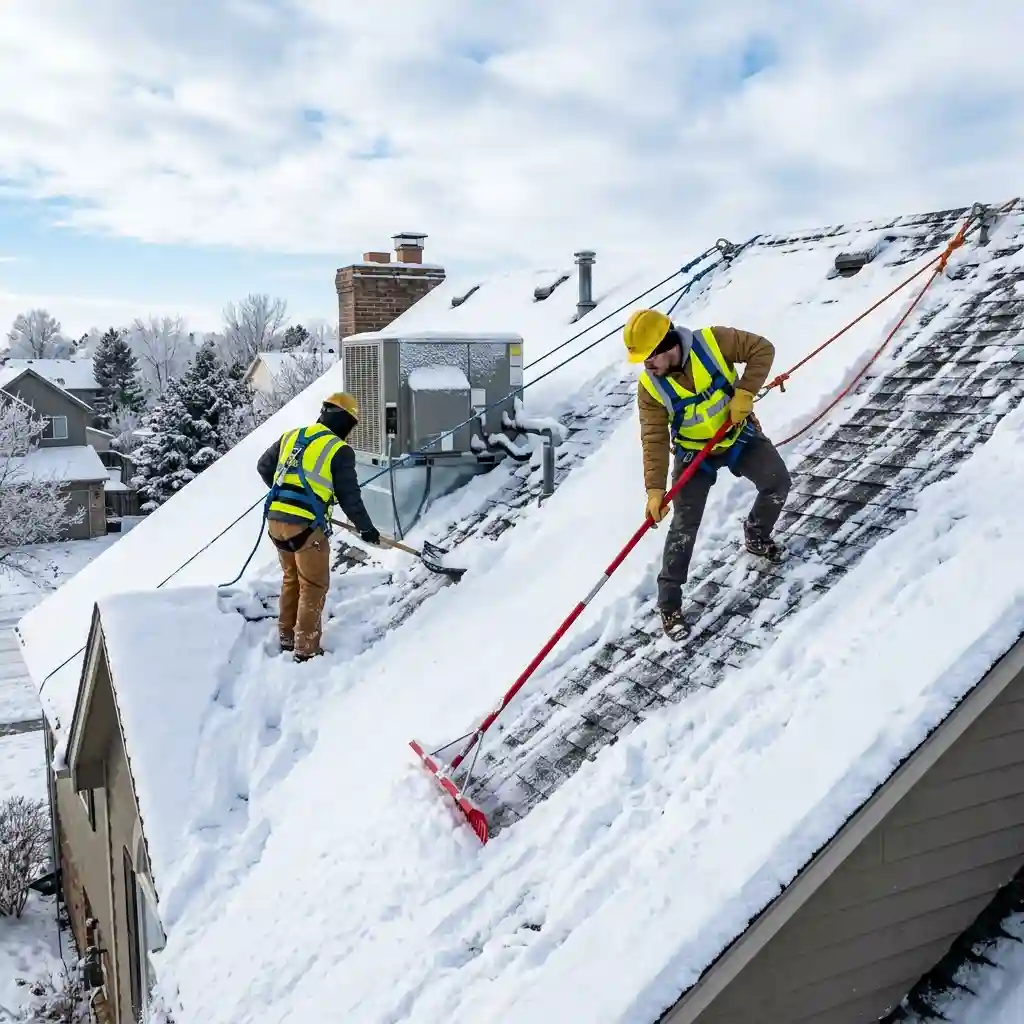
On a pitched residential roof, snow accumulates fastest at valleys and lower edges where drifting concentrates the load. The danger is not just weight. When snow at the upper roof melts from heat escaping the living space below and refreezes at the cold eaves, it forms an ice dam. That ridge of ice blocks drainage and forces meltwater back up under shingles, where it enters the decking, insulation, and eventually the ceiling below.
We clear snow from the full roof surface using roof rakes and plastic-edged shovels that protect the shingle granule coat. We leave a thin protective layer over the shingles rather than scraping to bare surface, which prevents tool contact damage while removing the majority of the load. Ice dams at the eaves are treated with calcium chloride to open a drainage channel through the ice without tearing the flashing or shingle edges underneath. After removal we inspect the eaves, gutters, and any flashing transitions for damage caused by the ice weight.
Expert Roof Work You Can Trust
Licensed, Insured & Guaranteed
Rooftop Snow Removal for Flat and Commercial Roofs
Residential Roof Snow Removal
Pitched residential roofs shed some snow naturally, but valleys, eaves, and lower edges still collect dangerous loads fast. When heat escaping from living spaces melts snow at the upper roof and it refreezes at the cold eaves, an ice dam forms, blocking drainage and forcing meltwater back under shingles into the decking and ceiling below. We clear the full surface using roof rakes and plastic-edged tools that protect shingle granules, and treat ice dams with calcium chloride to open drainage without tearing flashing or shingle edges.
Commercial Roof Snow Removal
Commercial roofs carry heavy equipment, wide spans, and long winters, which makes snow accumulation a serious structural concern. Wind drifts concentrate load against parapets and rooftop units, creating localized stress two to three times the average depth across the rest of the roof. That is where failures begin. We respond quickly after major storm events, clear load systematically to relieve stress evenly, and document conditions after every job so facility managers have a written record of roof status through the season.
Flat Roof Snow Removal
Flat and low-slope roofs face the highest snow risk because there is no pitch to shed any accumulation naturally. Every inch stays exactly where it lands, and when drains and scuppers freeze or clog, even a modest warm period creates standing water across the membrane with nowhere to go. We clear drains first on every job, remove snow using foam-edged pushers and polyethylene scoops safe for TPO, EPDM, PVC, and modified bitumen, and treat ice at drain bowls with calcium chloride or controlled steam. Metal tools never touch the membrane surface.
Snow Load: When Does It Become a Structural Risk
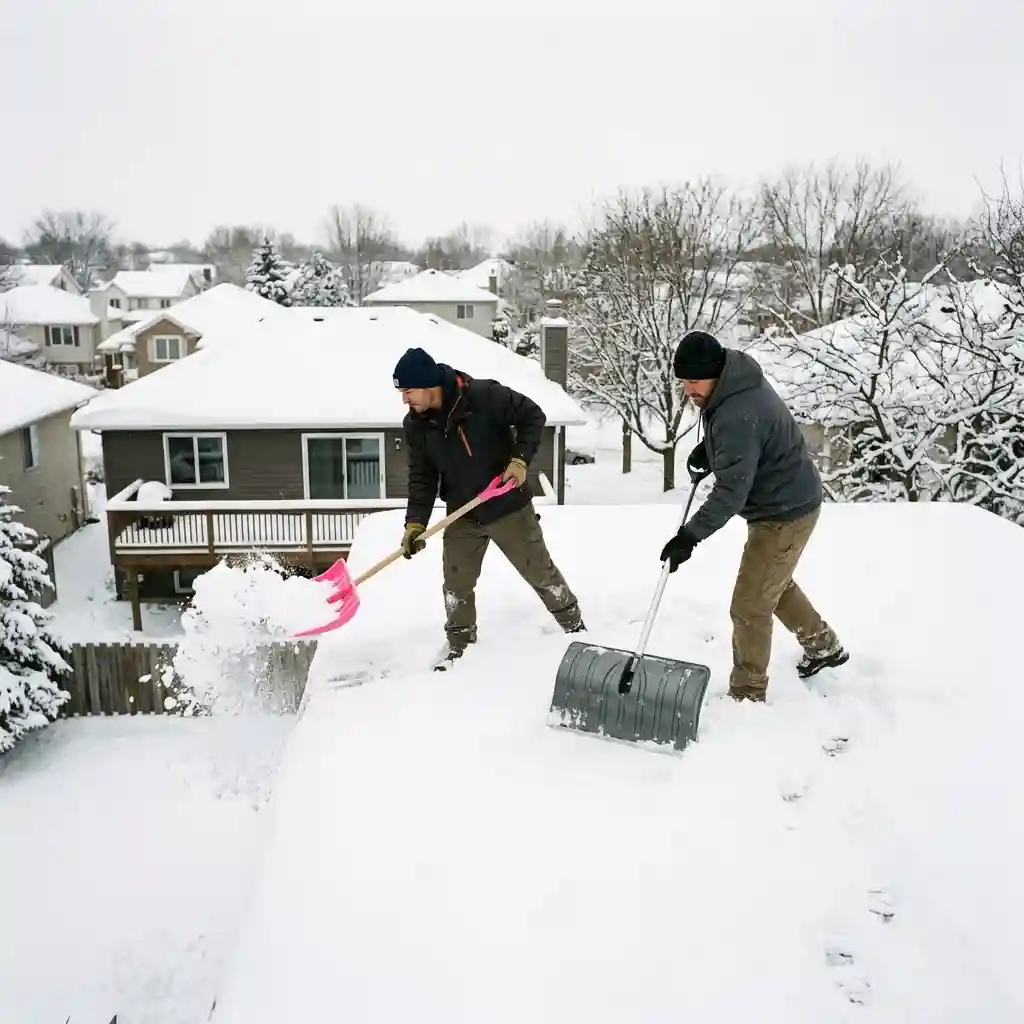
Most residential roofs are engineered to carry 20 to 40 pounds per square foot of snow load. Most commercial flat roofs sit in a similar range. The problem is that load calculations assume uniformly distributed snow, and that is rarely what happens. Wind drifting concentrates snow against parapets, in roof corners, and on lower roof sections adjacent to taller walls. A drift in a corner can reach three or four times the depth of the general roof surface.
Wet, heavy snow that partially melts and refreezes also weighs significantly more than fresh dry snow. A roof that handles a dry eight-inch snowfall without issue can be under serious stress from a wet four-inch storm that sits and freezes into a dense slab. The practical trigger for a removal call is six or more inches of accumulation on a flat roof, or visible drifting on any roof type that looks disproportionate to the general snowfall depth. If you hear creaking or popping from the roof structure, or notice doors and windows suddenly sticking after a storm, those are signs the structure is deflecting under load. Call immediately.
Our Rooftop Snow Removal Process
Our process is designed to be thorough, transparent, and practical for both residential and commercial flat roof owners.
01
Site Assessment
We assess snow depth, surface type, and drift patterns before crew gets on the roof. Fall protection equipment is set up before any work begins.
02
Drain and Scupper Clearing
All drainage points are located and cleared first so meltwater exits the roof as removal progresses rather than pooling behind the work area.
03
Systematic Snow Removal
We work across the roof in a planned pattern using surface-appropriate tools, removing snow in sections to relieve load evenly without shifting stress to one area of the structure.
04
Ice Dam and Ice Treatment
Ice dams at eaves, drains, and flashing transitions are treated with calcium chloride or controlled steam removal to restore drainage without damaging roofing material.
05
Post-Removal Roof Inspection
With the surface clear, we inspect the full roof for damage from snow load, ice formation, or the removal process. Membrane condition, flashing integrity, and structural indicators are all checked.
06
Written Report and Repair Quote if Needed
You receive a written summary of work completed and conditions observed. Any repair needs are quoted separately in writing with photos.
- Why Choose Us
Why Choose Us for Rooftop Snow Removal
We are licensed and fully insured on every job, and every crew member working at height is equipped with proper fall protection. We use roof-safe tools on every surface type and never bring metal blades into contact with membrane roofing. We clear drainage first, work in a systematic pattern, and inspect after every removal so damage from winter load is caught before it compounds through the rest of the season. We serve both residential and commercial properties, respond quickly after major storm events, and do not treat snow removal as a separate operation from the roofing knowledge needed to do it without creating new problems.
Transparent Pricing
No hidden fees; you know exactly what you are paying for.
Workmanship Warranty
Repairs backed by a warranty for your peace of mind.
Experienced Workforce
Skilled roofers with years of local Chicago experience.
24/7 Emergency Services
Fast response for leaks, storm damage, or ice dams.
Award Wining
Excellence You Can Trust
- FAQs
Frequently Asked Questions
Six or more inches on a flat or low-slope roof is a reliable trigger point. Heavy drifting on any roof type should also prompt a call regardless of overall depth.
With the wrong tools, yes. Metal shovels and hard-edged blades scrape shingles and puncture membranes. We use foam-edged and plastic tools designed for rooftop use that clear snow without damaging the surface.
An ice dam is a ridge of ice that forms at the roof eave when meltwater from the upper roof refreezes at the cold edge. It blocks drainage and forces water back under shingles or membrane edges into the building.
Yes. We handle snow removal on all roof types including flat membrane roofs, low-slope commercial roofs, and pitched residential roofs across all material types.
We use calcium chloride applications to open drainage channels through the ice and steam removal for severe accumulations. We do not chip or pry ice away from flashing or shingles mechanically.
Lorem ipsum dolor sit amet, consectetur adipiscing elit. Ut elit tellus, luctus nec ullamcorper mattis, pulvinar dapibus leo.
Quick Links
Our Services
- Roofing Construction
- Roof Maintenance
- Roof Repair
- Emergency Roof Repair
- Rooftop Snow Removal
- Interior Roof Repair
Contact Info
- +1 (773) 337-7813
- 2421 S, Drake Ave, Chicago, IL 60623 USA
- Mon - Fri : 8.00 AM - 7.00 PM
Copyright ©2026 Roof Repair Schicago. All Rights Reserved.