- Mon - Fri : 8.00 AM - 7.00 PM
- 2421 S, Drake Ave, Chicago, IL 60623 USA
- Welcome To Chicago Roof Repair Pros
Flat Roof Repair Services
Flat roofs fail differently than pitched roofs, and they need to be repaired differently too. The most common mistake we see when a flat roof starts leaking is someone patching the most visible wet spot and calling it done. On a flat roof, that almost never solves the problem. Water on a flat surface sits on the membrane, finds every weak seam and compromised flashing, and works its way in from multiple points at once. Locating the actual source of a flat roof failure takes systematic inspection, knowledge of how each membrane system behaves, and the experience to read what you are looking at when you find it. We have been repairing flat roofs on both residential and commercial buildings for over 30 years, across every system type, and we repair them with the right method and materials every time.
Request A Free Quote
Completed Projects
0
+
5 Star Reviews
0
+
Happy Customers
0
+
Why Flat Roofs Need Professional Repair
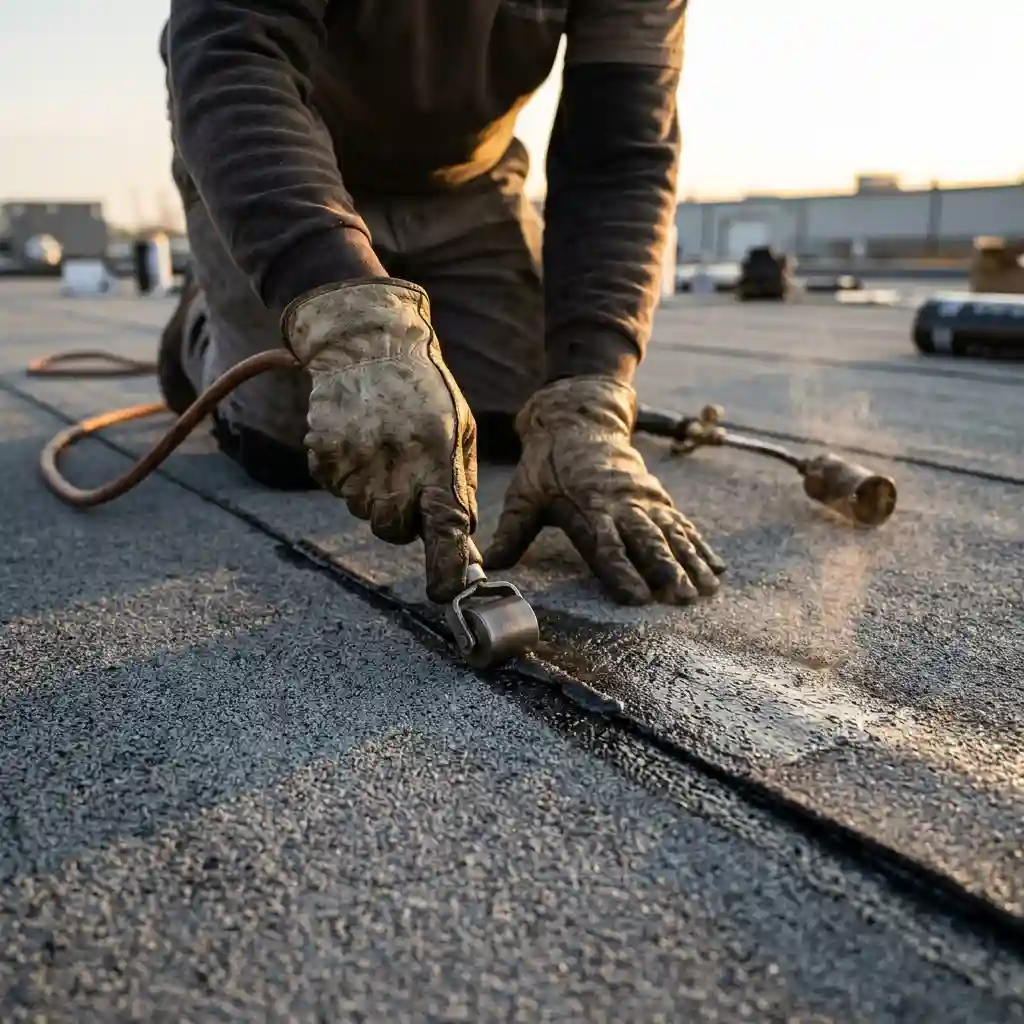
Flat roofs have no slope to shed water naturally, so even a small crack, puncture, or lifted seam can allow moisture to sit and slowly penetrate the membrane. Blistering surfaces, failed flashings, and split seams are early warning signs that the roofing system is no longer sealed — and ignoring them gives water a direct path into the insulation and roof deck below.
UV exposure and seasonal temperature changes add constant stress, causing materials to expand, contract, and weaken over time. Once water saturates the insulation, the damage spreads fast — leading to interior leaks, mold growth, and structural deterioration that costs far more to fix than the original repair.Professional flat roof repair identifies the true source of the problem, not just the visible symptom, and restores a watertight seal before minor damage turns into a full replacement.
Expert Roof Work You Can Trust
Licensed, Insured & Guaranteed
Flat Roof Repair Services We Provide
Expert diagnostics and lasting repairs across every flat roofing system, membrane type, and failure point.
Flat Roof Leak Detection and Repair
Water on a flat roof travels horizontally under the membrane before finding a path through the deck. We trace leaks systematically, inspecting the membrane surface, every seam, all flashings, and every penetration, until we locate the actual entry point. That is the location we repair, not just the area that looks worst.
Flat Roof Seam Repair and Seam Failure Repair
Seams are the weakest point on any flat roofing system. Thermal cycling opens heat-welded seams on TPO and PVC, breaks adhesive bonds on EPDM, and lifts lap joints on modified bitumen. We repair seams using the correct method for each system, heat welding, lap adhesive, or torch-applied reinforcement, and we never substitute the wrong technique to save time.
Flat Roof Membrane and Flashing Repair
The membrane surface develops blisters, punctures, and surface cracking from UV exposure, foot traffic, and age. Flashings at parapet walls, equipment curbs, pipe penetrations, and edge terminations are where movement and thermal stress concentrate and where water bypasses the membrane entirely when they fail. We repair both using materials and detailing matched to the specific system.
Ponding Water and Flat Roof Drainage Repair
Ponding water is not just a symptom, it accelerates every other failure on a flat roof. Standing water adds structural load, saturates seams, and turns any small gap into a constant active leak. We clear blocked drains and scuppers, correct drain collar failures, and identify where slope corrections or tapered insulation are needed to move water off the roof properly.
Storm Damage and HVAC Penetration Repair on Flat Roofs
High winds pull edge metal and perimeter flashings off flat roofs. Hail punctures single-ply membranes and cracks ballasted systems. Every pipe, vent, and mechanical unit that penetrates a flat roof is also a potential leak source, penetration flashings fail from UV degradation and physical disturbance from service work. We repair all of it using system-compatible materials and proper collar detailing.
Flat Roof Systems We Repair
Correct materials and proper technique applied to every roofing system we work on, no shortcuts, no substitutions.
TPO
Seam failures repaired with hot-air heat welding. Surface punctures and blisters patched with TPO membrane material and welded in place.
EPDM
Lap seam rebonding, puncture patching, and penetration collar replacement using EPDM-specific adhesive and compatible tape only. No silicone substitutes.
Modified Bitumen
Torch-applied or cold-applied cap sheet patches depending on site conditions. Base flashing replaced at all wall and curb terminations where needed.
Built-Up Roofing
Ply re-adhesion, blister resealing, drain area restoration, and gravel displacement correction assessed at the correct assembly level.
PVC
Heat-welded seam repairs using PVC-specific materials. Chemical-resistant products used near rooftop exhaust and grease vent locations.
Spray Polyurethane Foam
Surface coat failure repair, physical damage patching, and recoating with compatible products over properly prepared substrate.
Warning Signs Your Flat Roof Needs Repair Now
If any of these conditions are present on your roof, waiting will increase the damage and the cost of repair.
Water stains on interior ceilings
confirm active infiltration. The stain location rarely identifies the source, a proper inspection is required.
Ponding water lasting more than 48 hours
signals drainage failure. This is an urgent situation, not a monitoring one.
Membrane blisters or bubbles
indicate trapped moisture between layers. They will rupture and become open leak points.
Open or lifted seams
anywhere on the membrane are active water entry points, especially during freeze-thaw cycles.
Lifted or separated flashing
at any parapet, curb, or penetration means water is entering through the vertical surface and bypassing the membrane.
Surface alligatoring or extensive cracking
means the membrane or coating has lost flexibility and waterproofing integrity across those areas.
Our Flat Roof Repair Process
A structured six-step process from inspection through warranty, so every repair is documented, verified, and guaranteed.
01
Flat Roof Inspection and Leak Tracing
We walk the full membrane surface, inspect all seams, flashings, and drainage points, and trace active leaks to their actual source before quoting anything.
02
Written Repair Quote with System-Specific Scope
You receive a written quote identifying each failure point, the repair method, and materials to be used, specific to your system type, not a generic estimate.
03
Material Procurement and Scheduling
We source system-compatible repair materials before arriving for the repair. Compatibility is not something we determine on-site.
04
System-Specific Repair Execution
Seams are heat welded or adhesive bonded as required by the system. Flashings are replaced with correct detailing. Drainage issues are resolved at the source.
05
Post-Repair Inspection and Drainage Verification
We walk every repaired section, confirm all patches and flashings are properly seated, and verify drainage is functioning from all points.
06
Written Report, Photos, and Workmanship Warranty
You receive a written repair report with photographs and a written workmanship warranty covering all completed work.
Flat Roofs We Repair: Residential and Commercial
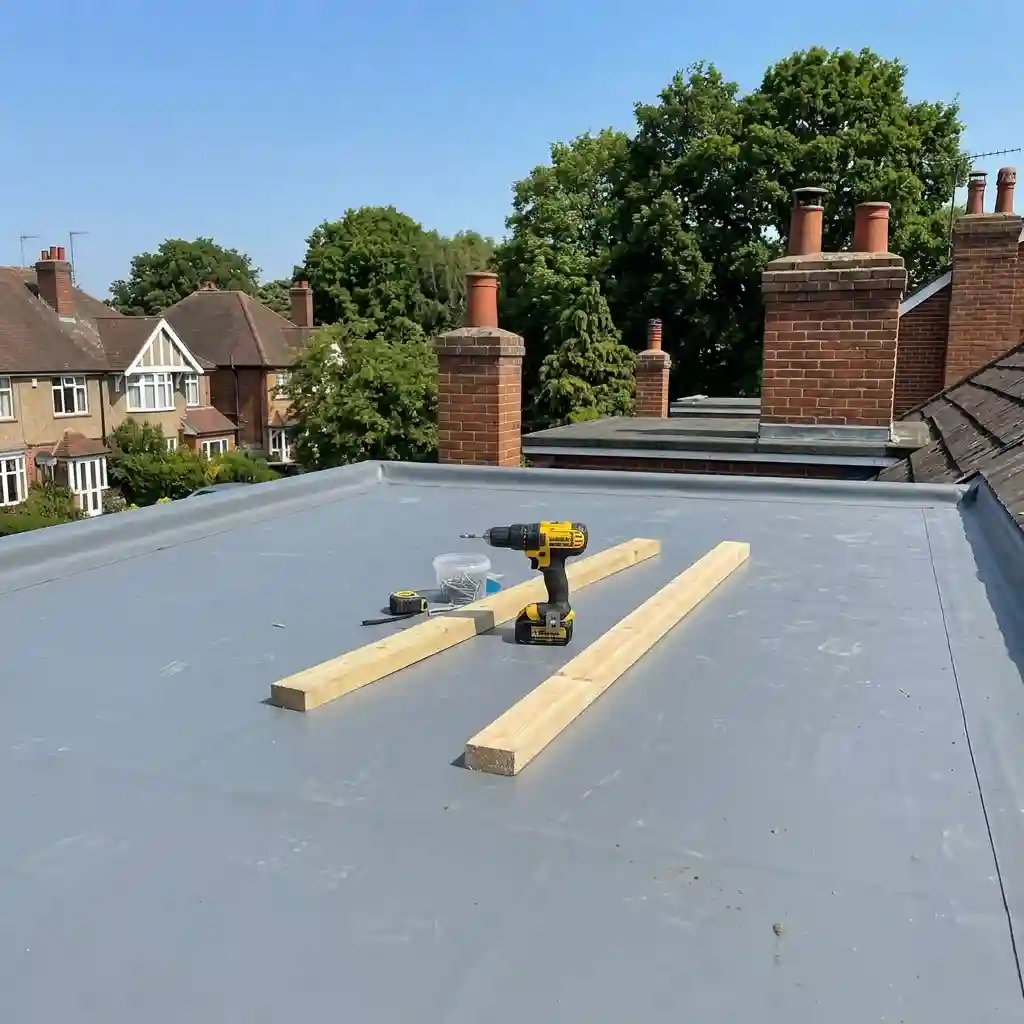
Flat roof repair is not just for large commercial buildings. Many residential properties have flat or low-slope roofs that develop the same cracks, seam failures, and membrane damage that commercial roofs do. We repair flat roofs on residential bungalows, two-flats, coach houses, and additions just as thoroughly as we repair flat roofs on commercial and industrial buildings.
The repair principles are the same regardless of building type. What changes is the size, the access logistics, and sometimes the membrane system in use. Whether you own a home with a flat garage roof or manage a commercial building with thousands of square feet of membrane, our repair work is built to address your specific situation and restore a watertight seal that lasts.
- Why Choose Us
Why Choose Us for Flat Roof Repair
We are licensed and fully insured on every flat roof repair project, and we are manufacturer certified on the major membrane systems, which means our repair methods keep your warranty intact rather than voiding it. Our 30 years of flat roofing experience across both residential and commercial buildings is what makes accurate leak diagnosis possible instead of trial-and-error patching. We provide written quotes before work starts, photograph every repair area, and deliver a written workmanship warranty when the job is complete. We do not cut corners on material compatibility or surface preparation, which is where most flat roof repairs fail prematurely. We do not recommend scope that is not needed, and when we say a repair is the right answer, it is because it genuinely is.
Transparent Pricing
No hidden fees; you know exactly what you are paying for.
Workmanship Warranty
Repairs backed by a warranty for your peace of mind.
Experienced Workforce
Skilled roofers with years of local Chicago experience.
24/7 Emergency Services
Fast response for leaks, storm damage, or ice dams.
Award Wining
Excellence You Can Trust
- FAQs
Frequently Asked Questions
We inspect the full membrane surface, all seams, flashings, and drainage points systematically and correlate findings with interior stain locations. For complex leaks, we use flood testing or infrared moisture scanning.
Most flat roofs with isolated failures are repair candidates regardless of age. If more than 25 to 30 percent of the membrane is failing or insulation is saturated across large sections, we discuss replacement as the more cost-effective answer.
A repair done with the correct materials and method for the system type should last as long as the surrounding membrane. Repairs that fail quickly almost always come down to wrong materials or skipped surface prep.
Yes. We repair flat and low-slope sections on single-family homes, two-flats, three-flats, coach houses, and small apartment buildings using the same standards as commercial work.
Minor repairs run $300 to $900. Moderate repairs involving multiple failure points or larger patches range from $900 to $3,500. All jobs receive a written, itemized quote before work begins.
Lorem ipsum dolor sit amet, consectetur adipiscing elit. Ut elit tellus, luctus nec ullamcorper mattis, pulvinar dapibus leo.
Quick Links
Our Services
- Roofing Construction
- Roof Maintenance
- Roof Repair
- Emergency Roof Repair
- Rooftop Snow Removal
- Interior Roof Repair
Contact Info
- +1 (773) 337-7813
- 2421 S, Drake Ave, Chicago, IL 60623 USA
- Mon - Fri : 8.00 AM - 7.00 PM
Copyright ©2026 Roof Repair Schicago. All Rights Reserved.